How Grab Turned a Loyalty Program Into a Game and Got a 40% Engagement Rate
Most loyalty programs have the same problem. Users earn points passively, forget they exist, and never redeem them. The rewards are real, but the experience around them isn't engaging enough to matter. Grab wanted more than that.
The Challenge: Making Rewards Feel Earned
Grab is one of Southeast Asia's most recognized super apps, ride-hailing, food delivery, payments, all in one place.
Their GrabCoins loyalty program had real value to offer users. But communicating that value through standard ad formats wasn't creating the kind of engagement that drives actual redemption behavior.
The goal wasn't just impressions. It was participation.
The Solution: A Runner Game Inside an Ad
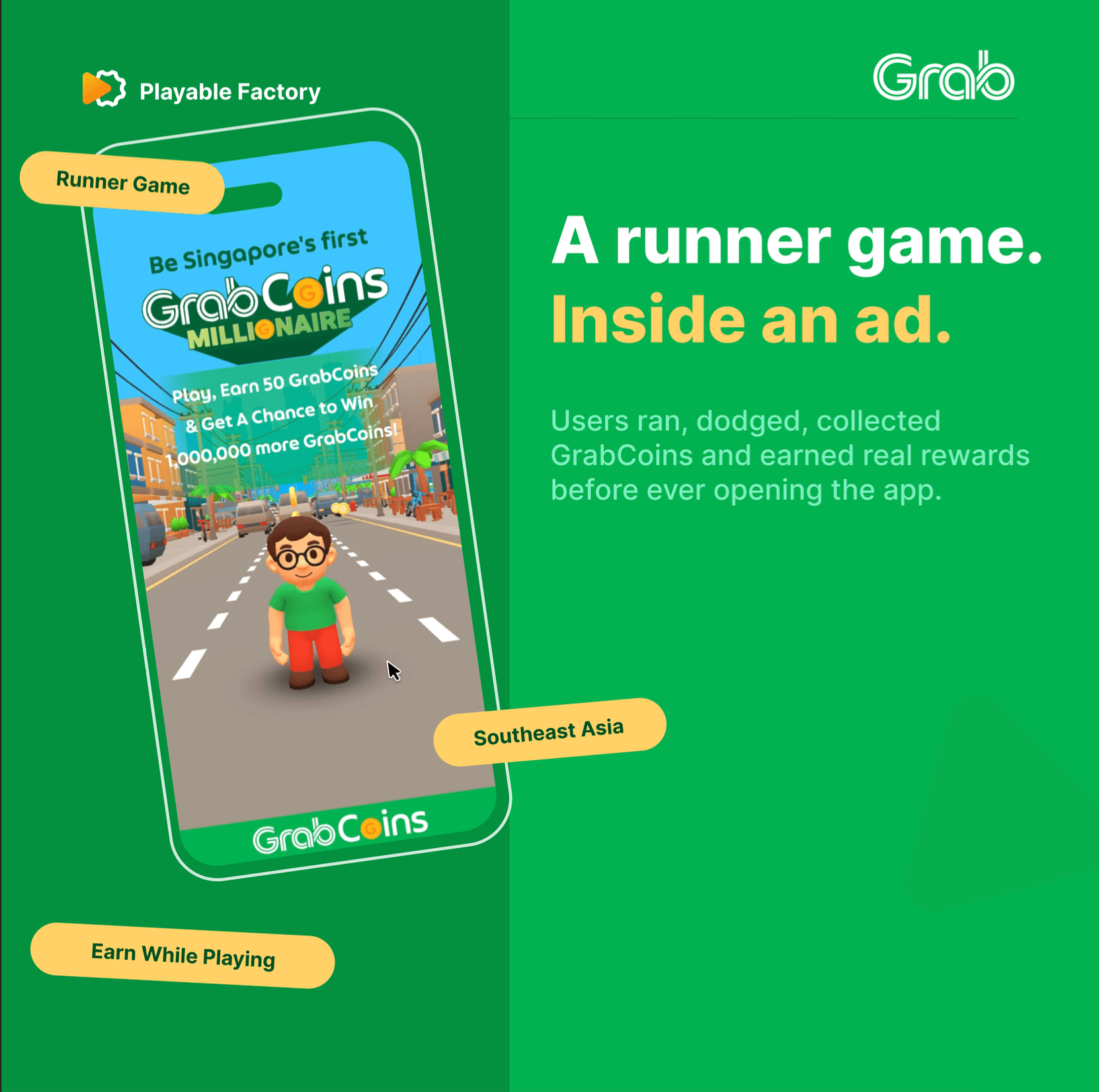
We built a full runner game experience inside a playable ad. Users ran through a Singapore street environment, dodging obstacles and collecting GrabCoins along the way.
Complete the run, earn 50 real GrabCoins, get a shot at winning 1,000,000 more.
The mechanic was simple and immediately familiar, runner games are one of the most intuitive mobile formats in existence.
But what made this different was the reward structure. Users weren't playing for points in a fictional game world. They were earning actual currency they could redeem inside the Grab app.
The Results
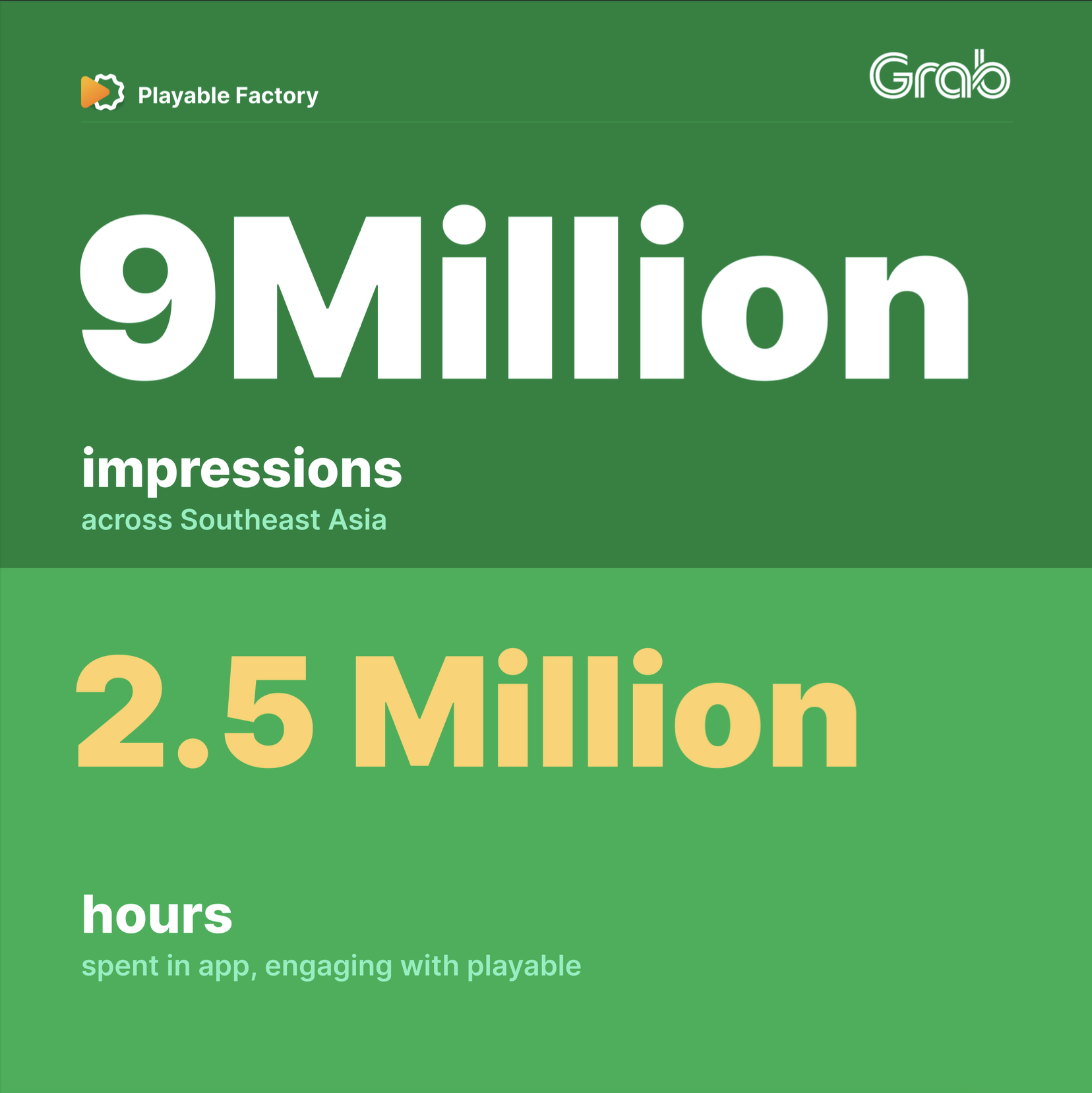
The campaign reached 9 million impressions across Southeast Asia.
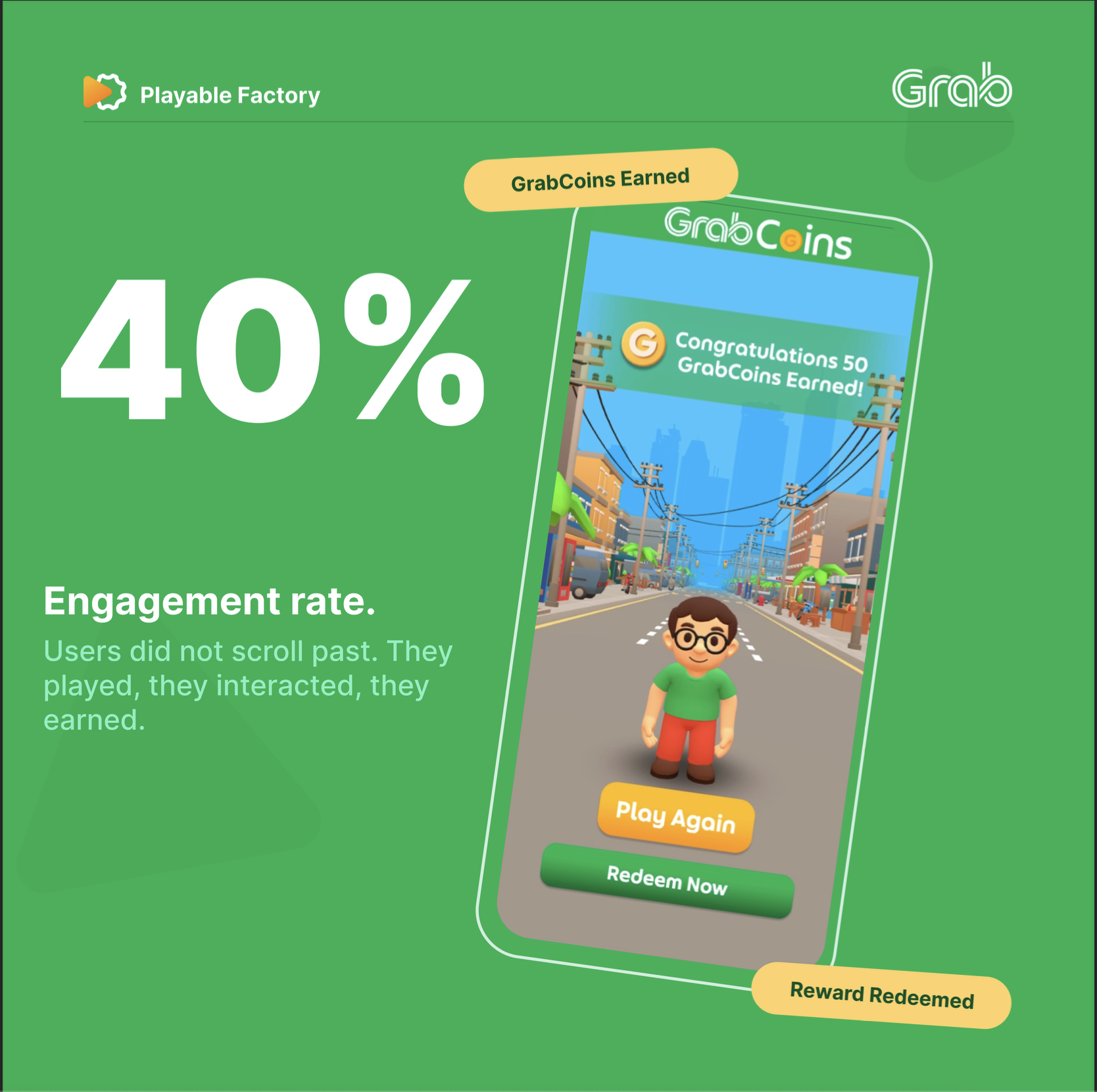
Users collectively spent 2.5 million hours engaging with the playable experience. Most importantly, 40% of users who encountered the ad actively interacted with it, they played, they earned, they redeemed.
That 40% engagement rate isn't a passive metric. It means nearly half of the audience chose to participate rather than scroll past.
Why It Worked
Three things separated this from a standard loyalty campaign.
- First, the reward was tangible from the very first interaction. Users didn't have to download the app, create an account, or make a purchase to understand the value of GrabCoins. They earned some in the ad itself.
- Second, the runner format created genuine tension and investment. Each run felt like it mattered because it did. The coins collected were real, and the chance at 1,000,000 more made completion compelling.
- Third, the playable format solved a core problem with loyalty advertising: passive formats can tell users a reward exists, but they can't make users feel what earning it is like. A game can.
The Takeaway
Loyalty programs don't fail because the rewards are bad. They fail because users never develop a habit of thinking about them. A playable ad that puts rewards directly in users' hands changes that dynamic entirely.
Grab didn't just run an ad campaign. They gave users a reason to care about GrabCoins before asking them to open the app. That sequencing, earn first, redeem later, is what drove the engagement numbers.
For brands with loyalty programs sitting underutilized, the lesson is clear: the reward is only as powerful as the experience built around it.